
| Home | Research | Lab | Publications | Courses & Seminars |
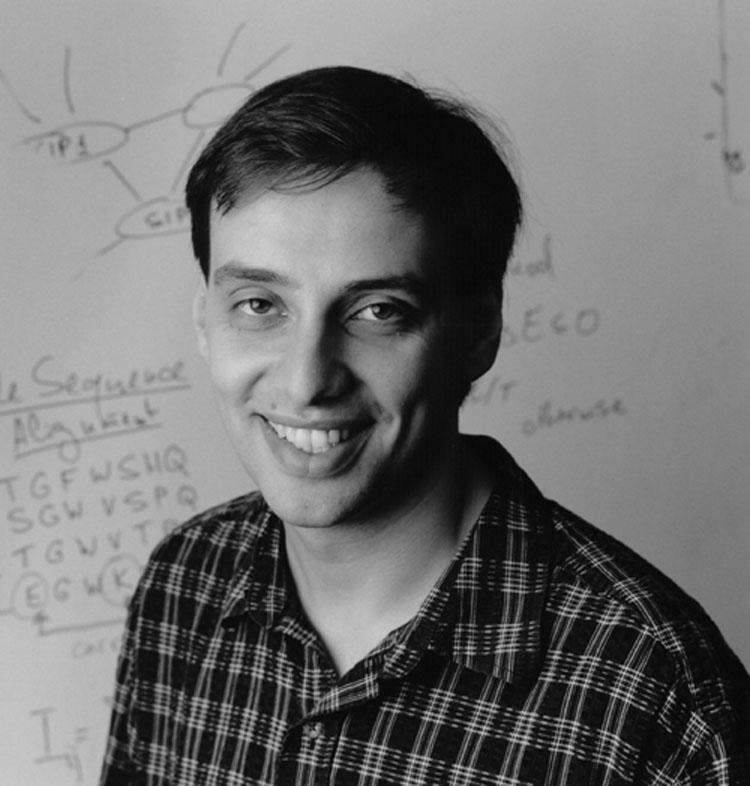 |
Leonid Mirny leonid[at]mit[dot]edu |
|
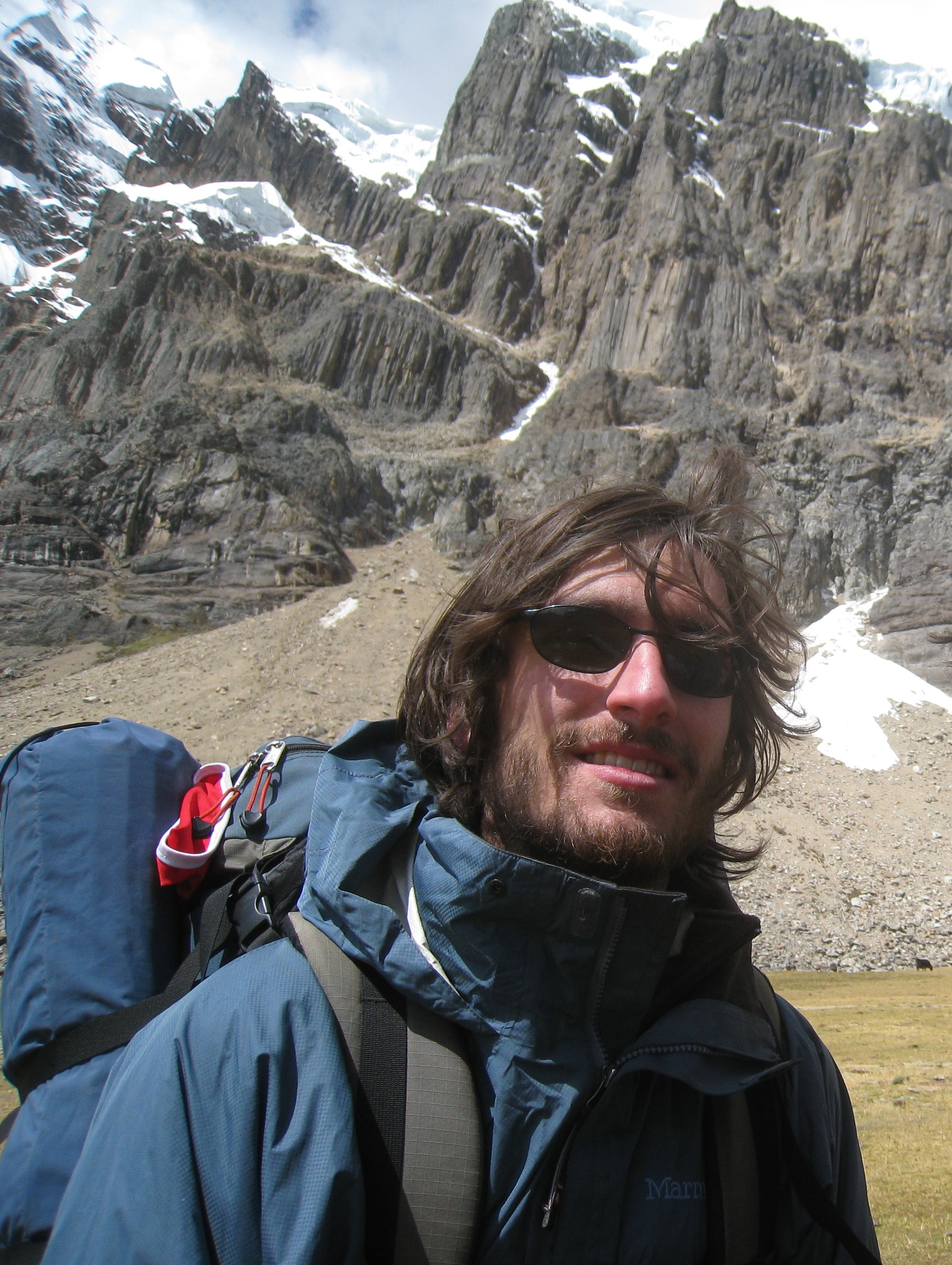
Geoff Fudenberg Harvard Biophysics, Ph.D. Student 3D Genome Organization: Physical models, statistical methods, and comparative genomics geoff.fudenberg[at]gmail[dot]com |
|
Maxim Imakaev MIT Physics, Ph.D. Student mimakaev[at]gmail[dot]com |
|
Jason Leith Harvard Biophysics, Ph.D. Student Several classes of proteins, including transcription factors, DNA-repair enzymes, and restriction enzymes, bind highly specifically to one or a few particular sites on a genome of millions to billions of base pairs. These proteins often are able to locate, using only thermal energy, and bind to their specific sites orders of magnitude faster than simple 3-D diffusion would allow. How they find their sites and recognize them so quickly, while avoiding "mislocalization", is not fully understood. Recent single-molecule experiments have verified predictions that these proteins would bind non-specifically to DNA and undergo 1-D diffusion in order to speed up the search process. Our lab has proposed that these sliding proteins undergo a conformational transition between a fast-sliding state and a stable-binding state, so that they can locate their cognate sites quickly and still bind securely. Very recent structural studies that have shown that the conformation of transcription factors and restriction enzymes indeed differs depending on whether the protein is bound to its cognate site or to a non-specific sequence. My work involves simulating the search, re-folding, and binding processes to better understand the physical parameters that govern the efficiency and stability of target binding. Additionally, I collaborate with Antoine van Oijen's group at Harvard Medical School in performing single-molecule microscopy experiments that examine the dynamics of p53's sliding on DNA. jleith[at]fas[dot]harvard[dot]edu |

|
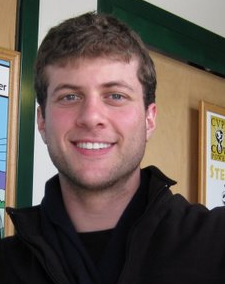
Chris McFarland Harvard Biophysics, Ph.D. Student Precancerous cells acquire thousands of mutations as they evolve into a malignant population, yet only a handful of these occur in genes believed to be directly related to the neoplastic phenotype. Based on evidence from the Cancer Genome Project, we have found that many of these previously ignored mutations, termed passenger mutations, have subtle effects on the cancer population that in many cases harm cancerous cells. I am interested in understanding these mutations further. Using theory from evolutionary genetics, we are trying to explain how passenger mutations arise in the population, despite their deleterious phenotypes, and how they effect growth. We have found many genetic and biophysical features of these passenger mutations within the genes and proteins that harbor them that allow us to phenotype, and potentially exacerbate, their effects on cancer. This project is part of a collaborative effort where I am working with the Sunyaev Lab to integrate our understanding of mutational patterns in cancer with their prior methods for phenotyping germ-line mutations using comparative genomics. We are then testing our models of passenger mutations in two ways: against recent whole-genome DNA sequence of cancers with Dr. Gaddy Getz at The Broad Institute and by studying the effects of these mutations in cell culture in conjunction with the Sherman Lab. Most recently, we have extended our research on passenger mutations towards cancerous cells which colonize into metastases; ''In silico'' results suggest that these populations are particularly susceptible to the effects of passenger mutations and we are exploring this possibility in a mouse model with researchers at . mcfarlan[at]fas[dot]harvard[dot]edu |
 |
Michael Schnall-Levin MIT Mathematics, Ph.D. Student Transcriptional Regulation: Factors\A0Beyond Binding Motif Matches mschnall[at]gmail[dot]com |
|
Jaie Woodard Harvard Biophysics, Ph.D. Student
|
|
Ivan Adzhubey Moscow State University, Ph.D. in Biology Bioinformatics infrastructure development and maintenance |
|
Vincent B\E9rub\E9, Ph.D. Student MIT Physics, Ph.D. Student Stochastic models of ion channels |
|
Juhi Chandalia, Masters Student MIT, B.S., M.S. Structure and evolution of regulatory networks |
|
Carlos G\F3mez-Uribe, Ph.D. Student HST MEMP/BIG, Ph.D. Stochastic models of signaling networks |
| Grigory Kolesov, Postdoctoral Fellow University of Munich, Ph.D. in Biology Evolution and prediction of specificity-determining residues |
| Hao Yuan Kueh, Rotation Student Harvard Biophysics Princeton University, B.S. Information transmission in enzymatic switch |
| Joe Levine, Masters Student MIT, B.S., M.S. Dynamics of signaling cascades |
| Lewyn Li, Postdoctoral Fellow Columbia University Harvard University, Ph.D. in Chemistry Specificity determining residues in protein kinases |
| Shankar Mukherji, Undergraduate Student MIT, B.S. Dynamics of signaling cascades |
| Ilya Rudkevich, Undergraduate Student Brandeis University, B.S. Prediction of natively unstructured proteins |
| Alex Shpunt, Ph.D. Student MIT, Ph.D. in Physics Biophysics of molecular self-assembly |
|
Michael Slutsky, Ph.D. Student MIT, Ph.D. in Physics Biophysics of protein-DNA interactions |
| Victor Spirin, Postdoctoral Fellow Boston University, Ph.D. in Physics Structure and regulation of biological networks |
| Anahita Tafvizi, Ph.D. Student Harvard University, Ph.D. in Physics Transcription factor-DNA interactions |
| Zeba Wunderlich, Ph.D. Student Harvard University, Ph.D. in Biophysics Modeling of the transcription factor search process Energetics of protein-protein interactions |