Mason J. Bates
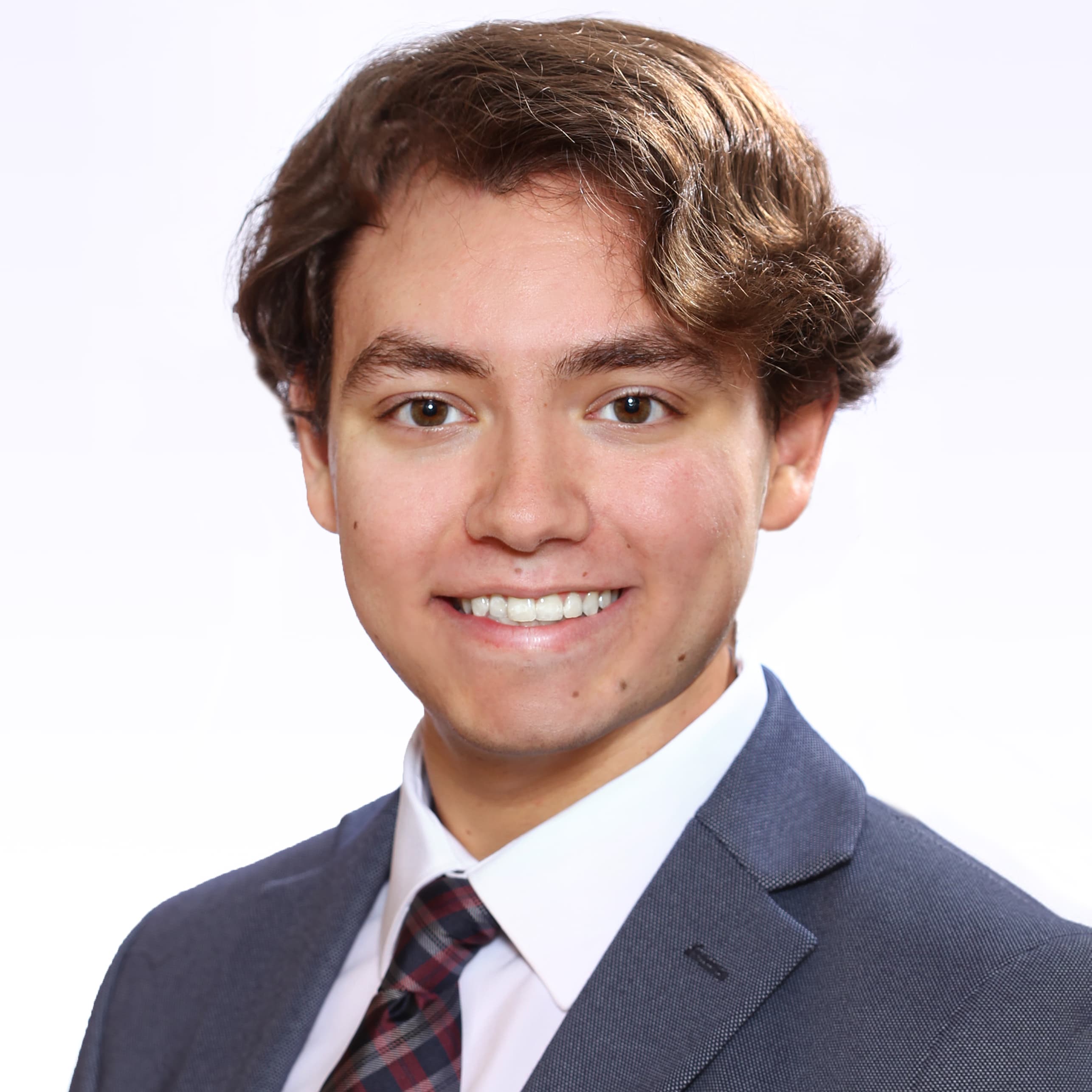
Quantum Engineering PhD student at the Massachusetts Institute of Technology. Recently graduated from Princeton University with highest honors in 2025. Research experience in Quantum Optics, Electrical Engineering, Nuclear Science, Materials Engineering, and Artificial Intelligence.
Pursuing PhD, Nuclear Science & Engineering (Quantum Engineering)
Aug '25 - Present
Awards/Honors: Hertz Fellowship Finalist (2026), MIT Nuclear Science Commendation for Academic Achievement (2026), MIT Center for Quantum Engineering Student Highlight (Jan 2026)
Highest Honors, B.S.E. Electrical & Computer Engineering
Class of '25
Awards/Honors: Sigma Xi Research Honor Society, Tau Beta Pi Engineering Honor Society, Phi Beta Kappa Academic Honor Society, Lore von Jaskowsky Prize for Outstanding Research in Engineering (2025), Peter Mark Prize for Outstanding Accomplishments in Materials/Devices (2025), Pyka Prize for Physics Excellence (2022), Shapiro Prize for Academic Excellence (2022)
Researcher in MIT's Quantum Engineering Group. Experimental research on solid-state quantum systems, with emphasis on nitrogen-vacancy (NV) centers in diamond and their application to quantum sensing. Investigating NV spin physics, optical initialization and readout, and nuclear magnetic resonance spectroscopy to probe spin dynamics, coherence, and magnetic field sensitivity.
Employed Molecular Beam Epitaxy (MBE) & Atomic Force Microscopy on vicinal GaAs samples, enabling more consistent, higher-quality, higher-mobility GaAs grown through MBE. Evaluated key surface structures & determined their origins through pit generation, thermal annealing, & desorption of native oxide to produce ultra-smooth surfaces with roughness on the order of 2-3 atoms. In 2025, this thesis earned the Lore von Jaskowsky Prize for outstanding contribution to engineering, & the Peter Mark Prize for outstanding accomplishments in materials/devices.
Designed & implemented Fiber Noise Cancellation System to stabilize light through noisy optical channels, utilizing PI control through Acousto-Optical Modulation, achieving 50+dB SNR over broad bandwidth. Designed & implemented an Injection Lock System for use with Erasure Conversion for quantum computing in Strontium Rydberg atom arrays.
Theoretical & experimental study of fusion reactor neutron shields through diagnostics, plasma heating, & fuel cycle. Tailored numerical simulations of particle interactions & heat removal; designed experiments to test RF penetration through shields for use with Princeton Field Reversed Configuration (PFRC) fusion reactor. In 2024, this project was recognized for Progress in Innovation by the US Department of Energy.
Applied Machine Learning to drone technology, handling time-critical missions. Assisted AILAB research team in developing adaptive algorithms to ease energy consumption, & improve data collection/delivery in drone swarms. Project released as FlockAI: a modular/reusable framework for drone swarm operation.
Utilized machine learning & predictive analytics to evaluate recidivism rates & discrimination in the justice system. Investigates novel methods for quantifying bias. Produced python package & research paper.
“Liouvillian Graphs for Operator Spreading in Many-Body Quantum Systems” Quantum Science & Eng. Consortium Research Conference 2026, M Bates, T Lee, A Stasiuk, P Cappellaro
“Surface Morphology and Mobility Anisotropy in Vicinal GaAs(001): Linking Molecular Beam Epitaxy Interface Structures to Electrical Transport” Princeton Electrical & Computer Eng. 2025, M Bates
"Error/Noise Resiliency in Neutral Atom Arrays” Princeton International Internship Program, Summer Undergraduate Conference 2024, M Bates
“Geometries to Improve RF Passthrough Behavior of Neutron Shielding for PFRC”, Princeton Plasma Science and Technology (PPST) 2023, M Bates, S Morel
“Fluidized Boron-pellet-bed neutron shielding for fusion reactors”, Invention Disclosure: 24-4068-1, Technology Memo: PPPL No. M-1055, S Cohen, M Bates, B Berlinger, S Capili, S Morel, G Nucci
“Princeton Field Reversed Configuration Rotating Magnetic Field Antenna Modeling”, Princeton Plasma Science and Technology (PPST) Conference 2023, M Bates, S Morel
“Investigating Feature Importance to Evaluate Fairness in Law”, Inspirit AI, Horizon Academic Conference 2021, M Bates
Software: C++, Python, Java, GitHub, MATLAB, AutoCAD, Adobe Photoshop & Illustrator, Blender, CorelDRAW, Rhino3D, SolidWorks, GUI design, Tidy3D FDTD, Verilog, Virtuoso.
Hardware/Interfaces: PSoC, Arduino, I2C, servo motors/controllers, SPI.
Lab: Certified in lab safety, photolithography/etching, radio frequency design, centrifuge operation, sterilization techniques, spectrometry, chemical handling, use of Spectrum & Network Analyzers, microscopy, molecular beam epitaxy, nuclear magnetic resonance.
Manufacturing: Transistor/solar cell production, 3D printing, rapid prototyping, laser cutting, shop tools
Communication: Technical writing, public forum debate, media production, digital imaging, photography
Graduate Application Assistance Program — MIT NSE Mentor
Princeton Students in Quantum — Workshops & Hackathons
Teaching Assistant — Robotics & Circuit Design
Residential College Leadership Team
Princeton Model Congress — Cabinet Lead Chair
Mathematics Tutor — Algebra through Calculus
-