Reducing Lead Contamination Through Hydroponically-Grown Mycorrhizal Plants
September 2022 - May 2023
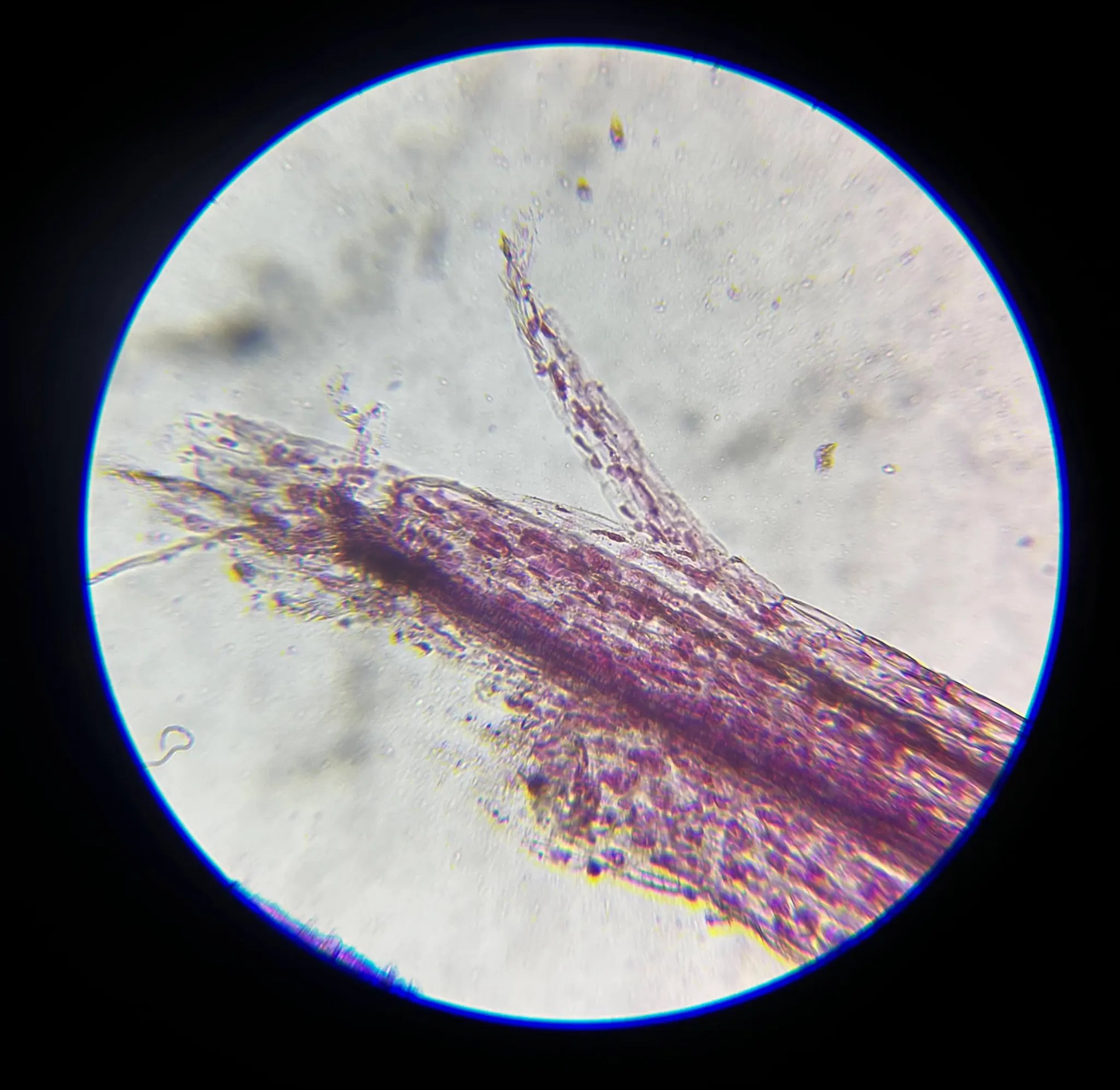
Summary: Lead poisoning causes an estimated 1 million deaths each year worldwide, yet current lead purification methods are costly and require existing infrastructure, limiting their use in low-income areas. This study investigated colonizing arbuscular mycorrhizal fungi (AMF) in deep water culture (DWC) hydroponic systems for lead phytoremediation, including development of a novel, accessible root staining procedure requiring neither trypan blue nor an autoclave. Results showed statistically significant improvements in mycorrhizal plant growth (average increases of 2.11 inches in root length and 3.67 grams in fresh weight biomass; t = 3.5319, p = 0.005), and ICP-MS analysis demonstrated uptake of 67.5% of lead from a 145 ppb solution within 6.5 hours. This study is one of the first to demonstrate the feasibility of AMF colonization in DWC, providing an affordable method for large-scale lead purification while promoting plant health.
In sophomore year, after my school’s kitchens shut down due to lead contamination, I learned of the severity of the global lead crisis, with lead poisoning occurring in 1 in 3 children worldwide and causing an estimated 1 million deaths each year. However, current methods of lead purification (like reverse osmosis or carbon filtration) are costly and often require existing infrastructure. Inspired by the basil plants on my counter, I wondered: what if a solution could be found in nature’s mechanisms and the symbiotic relationships already existing in aquatic environments?
While mycorrhizae had been studied extensively in soil systems, their use in hydroponics, particularly systems similar to habitats found in the natural environment, was relatively unexplored. My research goal was three-fold: designing a method for successful colonization of mycorrhizae in deep water culture (DWC) hydroponics, developing an inexpensive staining procedure for mycorrhizal detection, and evaluating the efficacy of the system as an accessible and sustainable lead purification method.
Over the course of the next year, I grew 50 basil plants hydroponically on my living room floor, experimented in a makeshift chemistry lab in my garage, and spent nights awed at the intricate fungal structures under my microscope. I was extremely grateful to present my research to experts at the International Science and Engineering Fair (ISEF), and to receive 3rd Place Grand Award.
After the publication of my results, I also mentored 8 students in the Philippines to replicate my experimental design for a mycorrhizal copper purification system.