MIT on
Climate Change
Number of MIT’s 1,080 faculty members working on projects to address climate change
Number of MIT’s five schools (and one college) whose faculty are working on questions related to climate change
Number of MIT OpenCourseWare courses on the topics of environment and sustainability
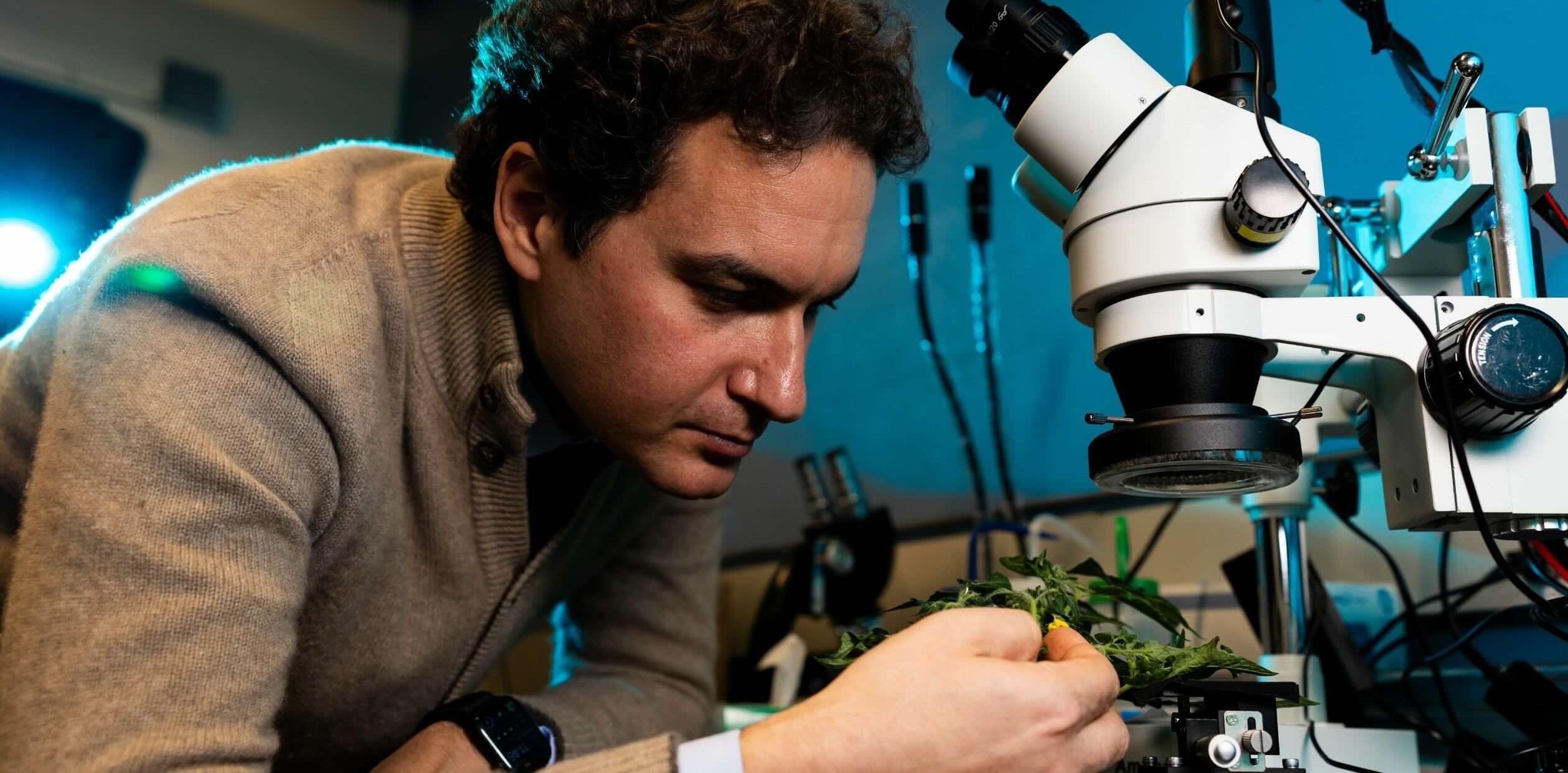
The Climate Project
Campus Climate Action
MIT’s role as a global leader in sustainability is strengthened by its commitment to be a test bed for decarbonization strategies and technologies.
Campus Emissions 0
MIT’s goal for direct campus emissions by 2050
Today I Learned: Climate podcast
Today I Learned: Climate (TILclimate) is MIT’s award-winning podcast that breaks down the science, technologies, and policies behind climate change, how it’s impacting us, and what we can do about it.

Climate Science, Risk and Solutions
This primer summarizes the most important evidence for human-caused climate change. It confronts the stickier questions about uncertainty in our projections, engages in a discussion of risk and risk management, and presents different options for taking action.

Featured MITx courses on climate change
Combining forces to advance ocean science
The combined strengths of MIT and the Woods Hole Oceanographic Institution (WHOI) joint program provides research and educational opportunities for PhD students seeking to explore the marine world.
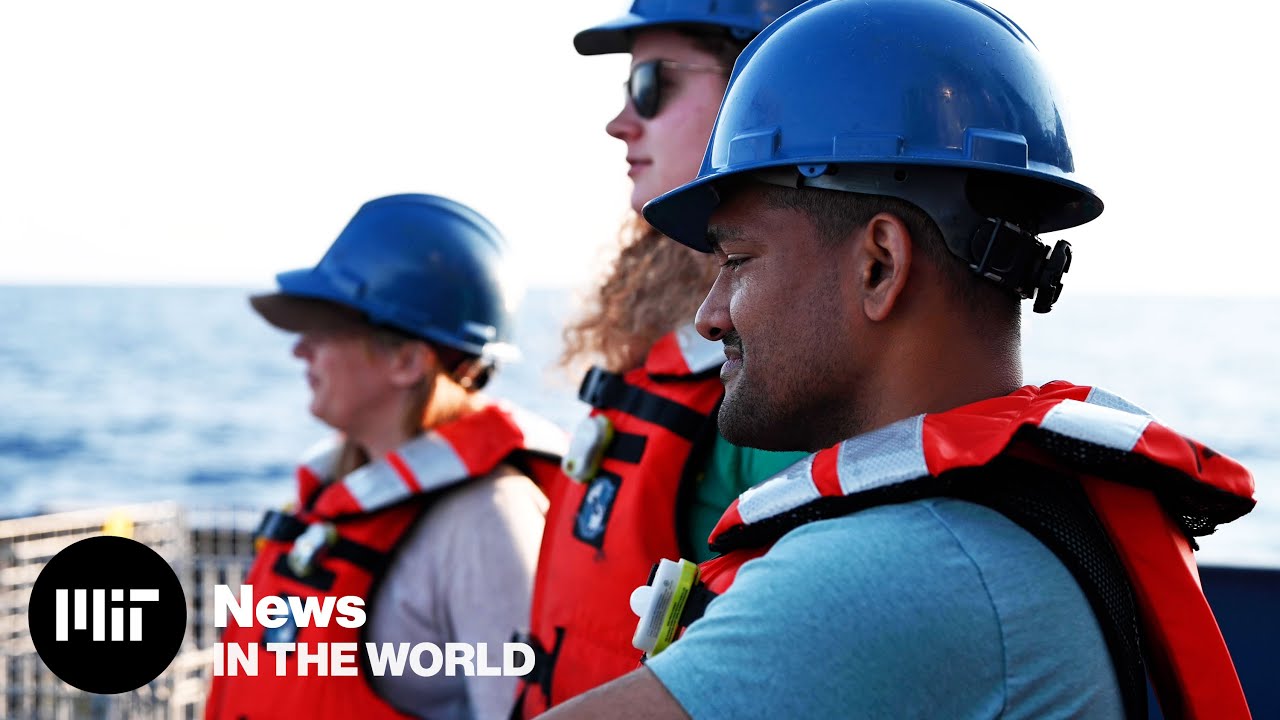
Looking for more videos?
More about climate change from MIT
News

Climate Action Learning Lab bridges research and policy for effective climate solutions
J-PAL North America’s Learning Lab supported a second cohort of U.S. government and nonprofit organizations in building and using rigorous evidence to advance effective decarbonization and adaptation strategies.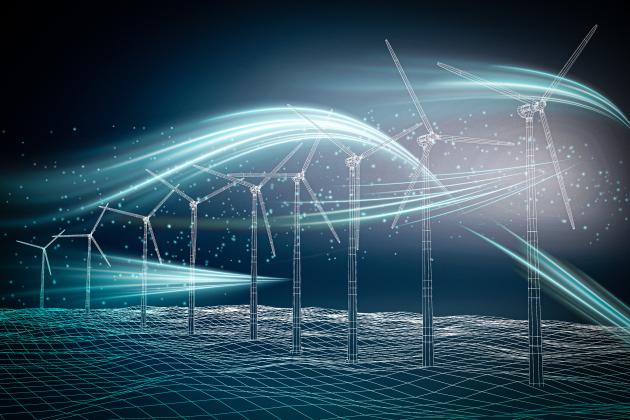
Pressurized experiments could help wind farms generate more power
A new way of simulating wind turbines in the field shows how tweaking turbine operation could unlock tens of thousands of dollars per turbine every year.![The “New World of Weather” project, one of MIT’s five Climate Grand Challenges announced in 2022, is “advancing the science, technologies, and practical strategies needed to help communities anticipate [extreme weather] and build greater resilience,” says MIT Vice President for Energy and Climate Evelyn Wang.](/files/styles/topic_area_news_item/public/images/news/cover/mit-climate-cyclone.jpg?itok=nssgWlco)
MIT researchers are mapping extreme weather risks — and building tools to act on them
The Climate Grand Challenges “New World of Weather” project shows how modeling, planning tools, and infrastructure analysis are translating research into real-world resilience.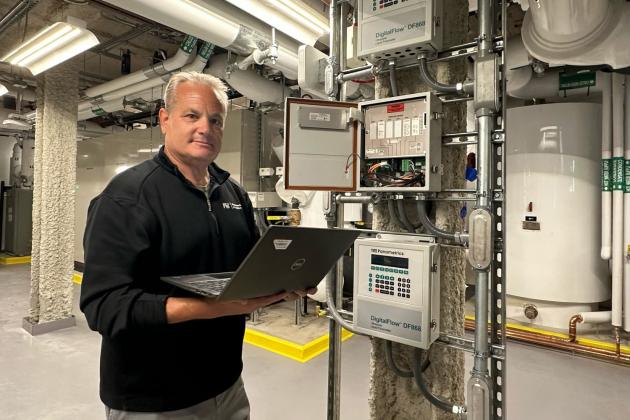
MIT makes progress on campus climate goals
Innovative strategies, technologies, and collaborations are helping MIT advance solutions on campus and beyond.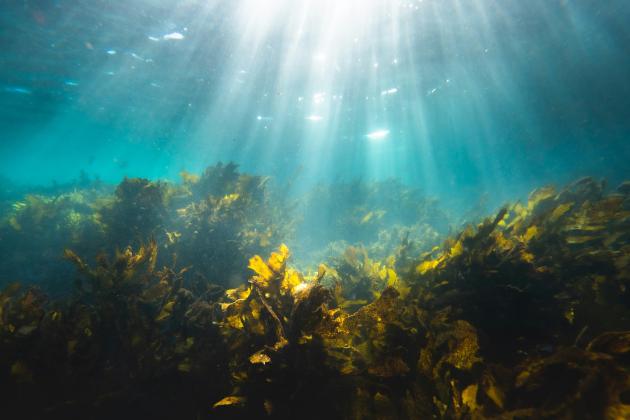
Marine bacteria team up to break down one of the ocean's toughest carbon-storing molecules
Researchers reveal how communities of marine bacteria divide the task of degrading fucoidan, a key player in ocean carbon storage.
Researchers tune into Arctic under-ice sounds and test through-ice communication
The work is part of a multiyear effort to develop a distributed sensor network for relaying data collected from this critical region.
Translating economic growth into better lives
Graduate student Lyonel Tanganco investigates how to improve public policy interventions and address challenges in nutrition, climate, and development.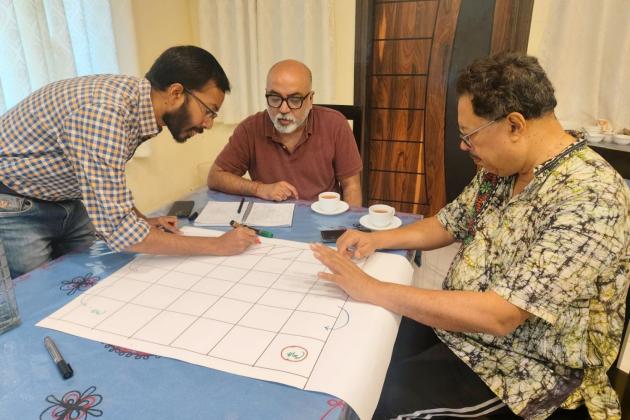
Playing against climate risk
Climate scientist Sai Ravela is using games to help coastal communities find creative adaptations to climate change.
Centers, Labs, and Programs
-
Abdul Latif Jameel Poverty Action Lab (J-PAL)
Through J-PAL's King Climate Action Initiative, J-PAL innovates, tests, and scales high-impact solutions at the nexus of climate change and poverty alleviation with governments, NGOs, donors, and companies worldwide.
-
Abdul Latif Jameel Water and Food Systems Lab (J-WAFS)
J-WAFS helps meet the needs of a rapidly changing planet by catalyzing research, innovation, and technology to improve access to safe and resilient supplies of water and food.
-
Building Technology Program
The Building Technology Program includes students, faculty, and staff working on design concepts and technologies that contribute to a more humane and sustainable built world.
-
Center for Energy and Environmental Policy (CEEPR)
CEEPR is a focal point for research on energy and environmental policy, and promotes rigorous, objective research for improved decision-making in government and the private sector.
-
Center for Sustainability Science and Strategy (CS3)
CS3 research aims to improve understanding of sustainability challenges and help decision‑makers address global change, enhancing well‑being for current and future generations.
-
D-Lab
MIT D-Lab works with people around the world to develop and advance collaborative approaches and practical solutions to global poverty challenges.
-
Environmental Solutions Initiative (ESI)
ESI is MIT’s campus-wide effort to mobilize the substantial scientific, engineering, policy, and design capacity of our community to contribute to addressing climate change and other environmental challenges of global import.
-
MIT Climate and Sustainability Consortium
MCSC is an academia-industry collaboration, working to accelerate the implementation of large-scale, real-world solutions to help meet global climate and sustainability challenges.
-
MIT Climate Nucleus
The Climate Nucleus is a faculty committee that has broad responsibility for the management and implementation of Fast Forward: MIT’s Climate Action Plan for the Decade.
-
MIT Climate Policy Center
The MIT Climate Policy Center serves as a non-partisan resource for policymakers who wish to advance evidence-based climate policy to help inform and support local, state, national, and international policymakers.
-
MIT Climate Portal
The portal offers educational information about climate change directly from MIT experts.
-
MIT Energy Initiative (MITEI)
MITEI connects researchers from across MIT and facilitates collaborations with industry, nonprofits, and government to speed and scale commercialization of no- and low-carbon technologies.
-
MIT Sea Grant
MIT Sea Grant is one of 34 university-based Sea Grant programs, encouraging local coastal and ocean stewardship and building collaborative infrastructures with academic, industry, government, and non-governmental partners.
-
MIT Sloan Sustainability Initiative
This group works to be a leading voice in sustainable business and policy, with a mission to provide the best education and apply academic rigor to real-world problems.
-
MIT Solve
MIT Solve's climate work selects and supports exceptional and diverse tech solutions from anywhere in the world that reduce emissions at scale or help communities adapt while reducing inequities and vulnerabilities.
-
Office of Sustainability
The mission of the Office of Sustainability is to transform MIT into a replicable model—one that generates just, equitable, applicable, and scalable solutions for responding to the unprecedented challenges of a changing planet.
-
Plasma Science and Fusion Center (PSFC)
Scientists at the PSFC are working to harness fusion energy on Earth, with the goal of designing power plants that will emit zero carbon, are safe, and incredibly power-dense.
In the Media
Fast Company
Using AI, satellite, and ocean current data, MIT spinout Coastal Assembly constructs artificial reefs designed to help rebuild beaches restore shrinking beaches, writes Fast Company’s Adele Peters. “We take 10 years of data, and we say, where do we predict the critical areas of erosion will be in the coming months to year,” says Prof. Skylar Tibbits, co-founder of Coastal Assembly. “That tells me where the best place is to intervene—what’s the part that is most critical, where we should focus our time, effort, and money.”
Associated Press
During Climate Week NYC, Evelyn Wang, MIT’s Vice President for Energy and Climate, emphasized the importance of utilizing AI to help tackle climate change, write Seth Borenstein and Jennifer McDermott for The Associated Press. Data centers adding to climate and water problems ‘is not forever,’ according to Wang, who told The Associated Press that data centers are about five years away from being water neutral and about a decade away from no longer adding to planet-warming emissions.
Quanta Magazine
Quanta Magazine’s Marlowe Starling highlights a 2014 study by MIT researchers that found that coral cilia “interact with the boundary layer by rapidly whipping about to generate swirls of fresh, oxygenated seawater.” The researchers “not only modeled the tiny vortices created by the cilia for the first time, but also revealed the cilia’s importance for survival and metabolism,” notes Starling.
The New York Times
New York Times reporter Quinn Glabicki highlights Coastal Assembly, an MIT spinout that uses AI, satellite and ocean current data to monitor communities threatened by coastal erosion and create underwater structures to regrow beaches at nearly 900 coastal sites. “We can go to any community around the world and understand what has happened and then propose a solution that is very precisely tailored to them,” says Prof. Skylar Tibbits, one of Coastal Assembly’s founders.
The Boston Globe
Prof. John Sterman speaks with The Boston Globe Editorial Board about the potential impacts of AI on a variety of fields. The Editorial Board writes that Sterman sees “outcomes where AI can be harnessed to solve societal problems such as climate change, but, he said, first and foremost, that will take smarter government policies and incentives. A new simulator he helped develop, En-ROADS, allows users to explore AI’s potential impacts on climate change, positive and negative, depending on which path we choose.”
Cleo Abram
Prof. Susan Solomon joins Cleo Abram’s “HUGE* If True,” to discuss her 1985 research uncovering how chlorofluorocarbons, were depleting the ozone layer, which led to the Montreal Protocol that banned the use of those chemicals. “It was an interesting feeling being under the ozone hole, knowing that half a world away an incredible change [the Montreal Protocol] had just occurred that really had a lot of potential to change things in the future—and indeed it did,” says Solomon.
TechCrunch
Assil Halimi PhD ‘25 speaks to TechCrunch’s Tim De Chant about his company Apollo Atomics, which is shrinking the steam generator component of a reactor to streamline nuclear power. “We don’t want to be incremental in nuclear and just improve a small thing,” says Halimi. “Our target is to beat natural gas.”
Electronic Design
MIT researchers have developed a low temperature process to extract battery-grade lithium from spodumene, the most common type of mineral containing lithium, using a reusable liquid reagent, writes Electronic Design’s Lee Goldberg. “The new process uses a liquid reagent to dissolve the rock into the useful forms of its constituent parts — not just battery-ready lithium salts, but also smelter-grade alumina and cement-ready silica,” writes Goldberg. “After the minerals are extracted, the solvent and reagent can be recovered and used again so that waste levels approach zero.”