Skip over navigation Accesskey=1
MIT Chemistry
HomeMain Menu
Directory Contact Us Search Site Map
  Faculty and Research


Troy Van Voorhis


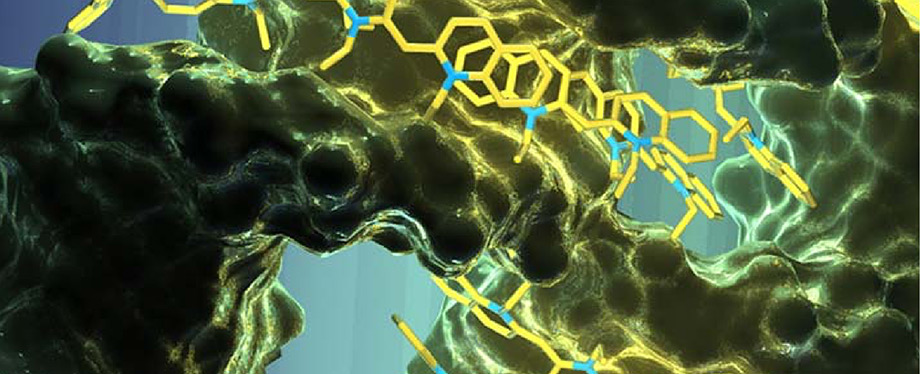
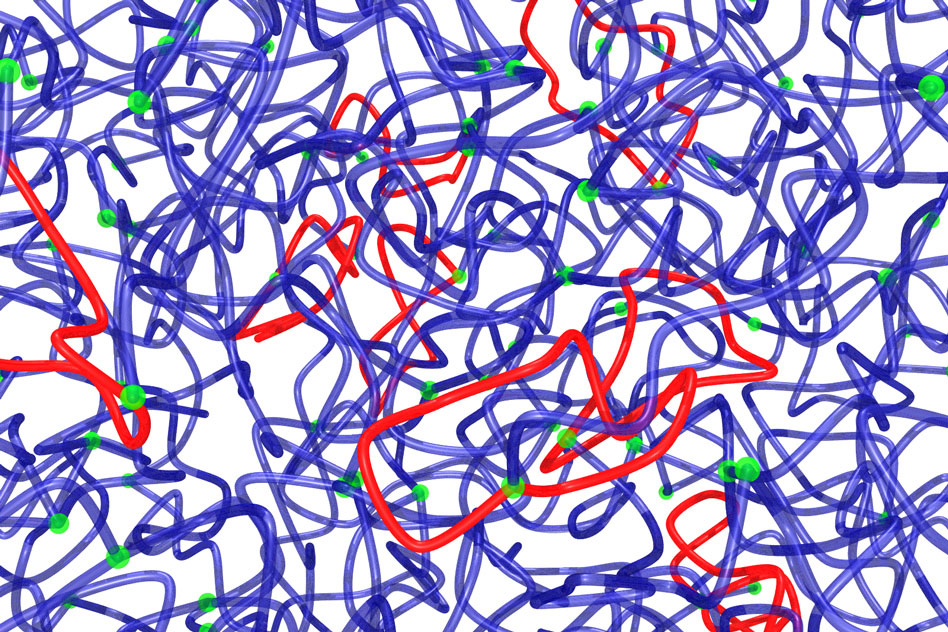
An ET state in the organic material Alq3 van voorhis graphic


Troy Van Voorhis

 Troy Van Voorhis
 Professor


 Room 6-229
 (617) 253-1488
 Fax: (617) 253-7030
 tvan@mit.edu
 Admin. Assistant: Li Miao
 Tel: (617) 452-2243

 Group web page


B.A. Rice University 1997
Ph.D. University of California at Berkeley 2001


Research Summary
One of the most powerful principles of modern chemistry is that complex macroscopic transformations can always be broken down into individual microscopic steps that determine the overall efficiency of the process. Thus, for example, the intricate dynamics of photosynthetic light harvesting complexes, light emitting diodes and molecular electrical conductors are commonly composed of only a few fundamental steps: charge separation/recombination, energy transfer and excited state bond-making. In order to obtain vital insight into these electronic processes, one must extend the powerful techniques of electronic structure theory into the relatively uncharted waters of electron dynamics . Our group is answering this challenge by developing new methods – primarily based on density functional theory (DFT) – that provide an accurate description of excited electron motion in molecular systems.

Electron Transfer Dynamics
Electron transfer (ET) is at the heart of all the applications described above. Marcus theory provides a surprisingly accurate description of the kinetics of these ET reactions in terms of physically appealing parameters – the extent of molecular reorganization, the strength of the electronic coupling and the free energy gap associated with the reaction. By using constrained DFT simulations, we are able to provide molecular interpretations of ET reaction mechanisms and bridge the gap between electron transfer kinetics and electron transfer dynamics . What is the mechanism of ET at work in a given application? What chemistry determines the timescale of the dynamics? What role do quantum effects such as dephasing and non-adiabatic transitions have in the reaction? How can the reaction be controlled?

Solar Energy
Efficient solar energy harvesting relies upon the successful conversion of energy between distinct physical states – light energy is harvested in localized molecular excitations (exctions) but ultimately stored in charge separated states. Along the way, numerous excited state processes such as energy transfer, charge recombination and excited state bond-making play a significant role in device function. We are studying the electron dynamics involved in solar cell function, which should ultimately generate new design principles for photosynthetic and photovoltaic systems. In particular, we are interested in obtaining a microscopic understanding of charge recombination in organic photovoltaic materials and the mechanism of O-O bond formation in artificial water-splitting catalysts.

Molecular Electronics
As Moore 's law pushes the features of computer hardware inexorably toward smaller and smaller length scales, an increasing number of devices have been proposed that use individual molecules as the fundamental building blocks. We are using the methods developed within our group to understand the fundamental chemical processes at work in these molecules in order to facilitate the design and integration of molecular components into future electronic devices. In particular, our group is pioneering an approach in which real time dynamics are used to probe the non-equilibrium current-voltage characteristics of molecular wires and junctions.

Method Development
A significant component of our research involves the design and testing of new techniques that will provide a reliable picture of the chemistry in these systems. At present our work development projects focus on three key issues: 1) How can one efficiently treat the dynamics that occur on multiple potential energy surfaces? 2) Can one accurately describe electronic excited states on the same footing with ground states? 3) Is it possible to extract long-time dynamics from the short-time information harvested in first-principles simulations?


MIT Logo      
 
About the Department
News and Events
Faculty and Research
Academic Programs
Life at MIT
After MIT and Career Resources
Environmental Health and Safety
Chemistry Outreach Program
Useful Links and Resources